After the Hype: What Super Bowl 2026 Revealed About Creative Effectiveness
Every year, the Super Bowl becomes the ultimate showcase of advertising ambition. Budgets peak. Celebrities multiply. Music rights escalate. Technology dazzles.
But once the hype fades, a more strategic question remains:
What actually drove performance?
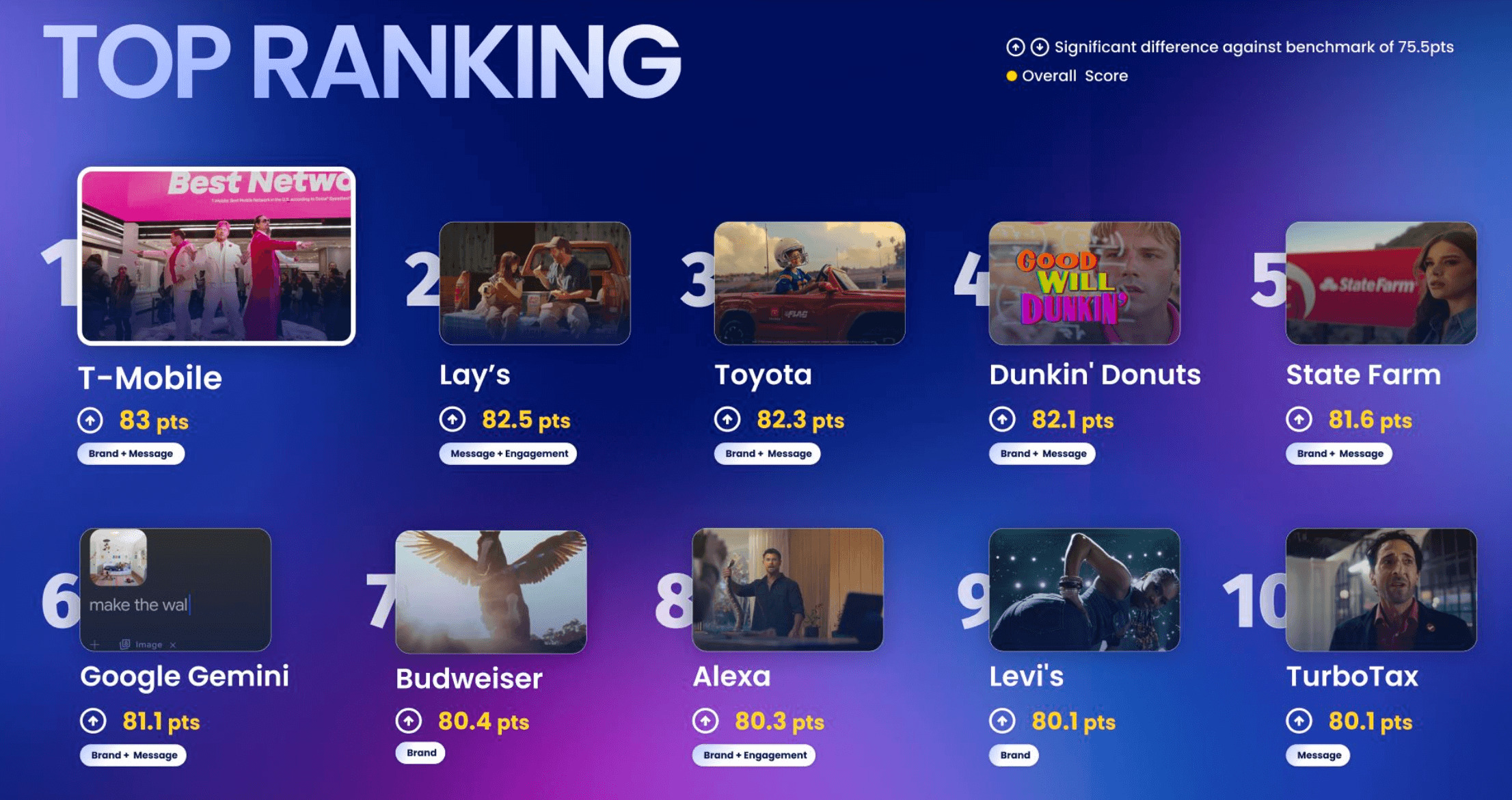
In our analysis of 40 Super Bowl 2026 ads across CPG, Tech, Automotive and Finance, the difference between top and bottom performers was not scale, celebrity power or AI usage.
It was integration.
The Illusion of Spectacle
This year, 68% of advertisers used celebrities. 50% of the Top 10 ads leveraged licensed classic music. AI appeared frequently as a cultural signal of innovation.
Yet when brands followed trends without anchoring a clear benefit, message clarity dropped to 45%.
The implication is significant for CMOs:
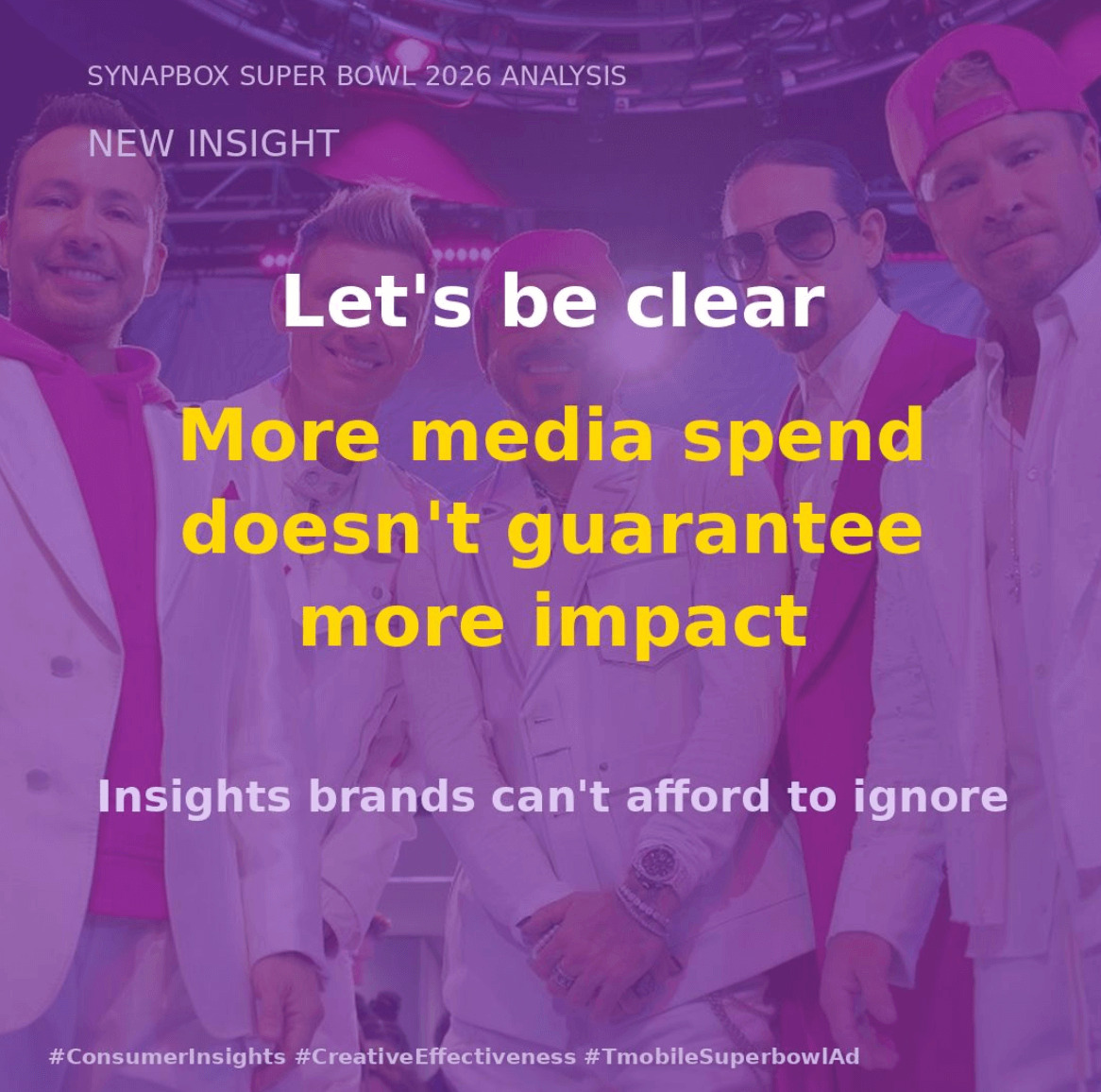
Visibility is common. Differentiation is structural.
High production value can generate attention. But attention without encoding does not generate growth.
When Humor Works, It Works Structurally
Humor dominated the stage. But humor alone did not predict performance.
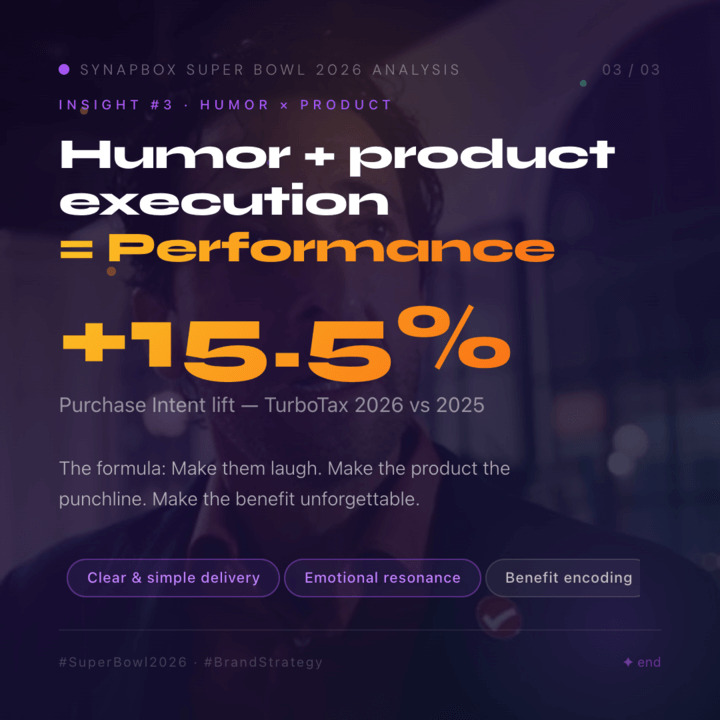
When humor and product worked as one integrated system, purchase intent increased by +15.5%.
In high-performing ads, the product was the punchline. In weaker ads, the product appeared after the emotional peak had already passed.
This distinction is not creative preference. It is memory architecture.
Entertainment creates attention. Integration creates memory. Memory drives behavior.
Music: Emotional Accelerator or Brand Competitor?
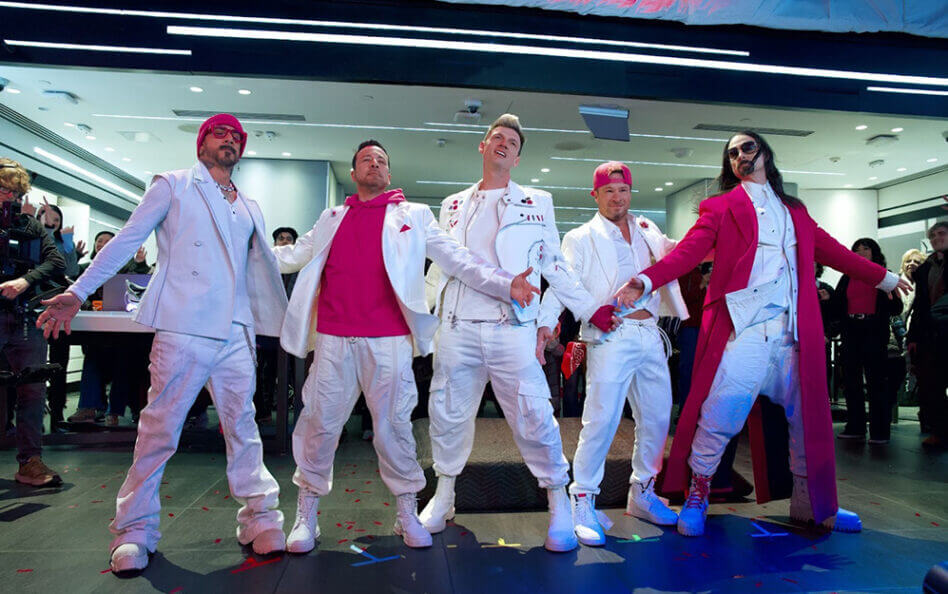
Music proved powerful. One top-performing ad saw a +9 point lift in message relevance driven by its music integration.
Music accelerates emotional encoding. It activates memory before logic. It amplifies narrative impact.
But music also introduces strategic risk.
If the emotional peak belongs to the song rather than the brand, recall attaches to culture, not to product.
The brands that performed best did not simply choose iconic tracks. They embedded the brand inside the emotional crescendo.
Amplification without anchoring dilutes effectiveness.
AI: The Enabler, Not the Hero
Despite the cultural dominance of AI, performance data showed something nuanced. AI worked best when it supported storytelling rather than becoming the protagonist.
Audiences responded more positively when technology enabled a human narrative instead of replacing it.
Innovation alone does not drive connection. Emotion still leads.
The System Behind Performance
Creative effectiveness behaves like a system, not a tactic.
Music. Humor. Celebrity. Technology. Each lever influences attention.
But performance occurs when those levers move in sync with a clearly articulated brand benefit.
Too much spectacle without clarity reduces encoding. Too much product without emotion reduces engagement.
The highest-performing Super Bowl 2026 ads orchestrated their elements around the brand, not around the trend.
Clarity is leverage. Integration is performance. Orchestration is competitive advantage.
Why This Matters Beyond the Super Bowl
The Super Bowl is not just a cultural event. It is a pressure test for creative strategy under maximum investment conditions.
When budgets reach record levels, inefficiency becomes expensive.
The brands that outperformed did not necessarily spend more. They integrated better.
For CMOs navigating fragmented media, rising production costs and increasing scrutiny on marketing ROI, this insight extends far beyond a single event.
Creative effectiveness is no longer subjective. It is measurable. And structural.